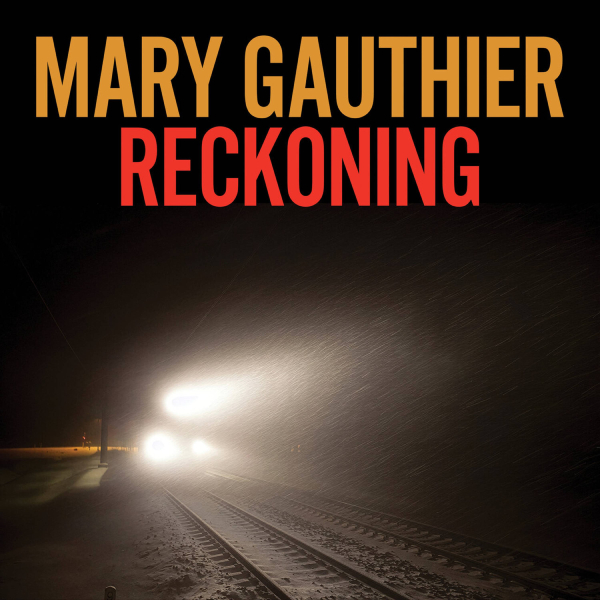
MARY GAUTHIER : RECKONING
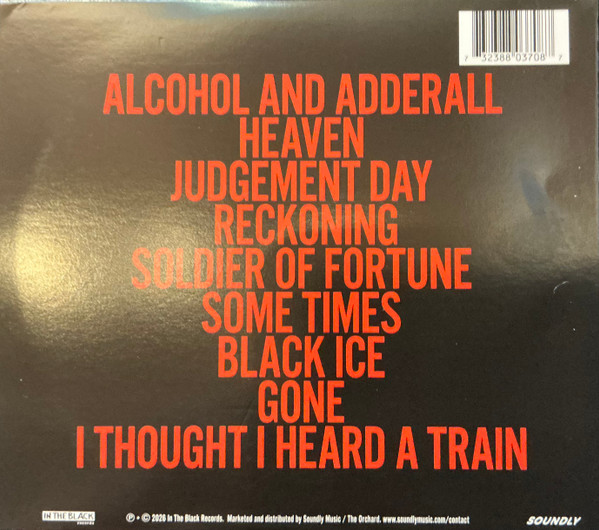
- Alcohol And Adderall
- Heaven
- Judgement Day
- Reckoning
- Soldier Of Fortune
- Some Times
- Black Ice
- Gone
- I Thought I Heard A Train
Label : Soundly / Thirty Tigers
Length : 36:15
Release Date : September 25, 2026
Review : Reckoning is the tenth studio album by the American singer-songwriter Mary Gauthier, released in September 2026 and the follow-up to Dark Enough To See The Stars (2022). It was produced by Neilson Hubbard and Dylan Alldredge in Nashville, with Mark Hallman producing the closing track in Austin. The sound is stripped down to Gauthier's voice, acoustic guitar and a little harmonica, with Cole Hubbard adding harmonica on "Judgement Day" and Michele Gazich viola on "Some Times". Eight of the nine songs are co-writes, with Jaimee Harris and Ben Roberts ("Alcohol And Adderall"), Lori McKenna ("Heaven"), Susan Gibson ("Judgement Day"), Aaron Lee Tasjan ("Reckoning"), Eliza Gilkyson ("Soldier Of Fortune"), Vince Gill ("Some Times") and Beth Nielsen Chapman ("Black Ice" and "Gone"). The only song she did not write herself is the closer, written by Tom Mason and Billy Alcorn in 1998. The songs deal with addiction, faith, loss and the political tensions of the present, always told through small, human stories, and they offer hope as well as anger. Critics generally praised the album as one of her most urgent works.
Review (Folk Alley) : Mary Gauthier excels at creating soundscapes, little cinematic scenes in which haunting music evokes a human heart bereft of hope and love or in which propulsive rhythms elevate the human longing to be transported above the fray of clashing emotions. The spare quality of the songs on ‘Reckoning,‘ her first album since 2018’s ‘Rifles & Rosary Beads,’ plumb the depths our losses as well as the ways we overcome them with anticipation and action, both in our personal and in our political relationships. On the album’s opening track, “Alcohol and Adderall,” Gauthier’s vibrant down strums ricochet through the atmosphere as they mimic the hollowness of a girl staring out her window and the familiar loneliness that addiction to alcohol and drugs begets. Despite acknowledging the addict’s plunge into the shadows and the darkness of night, the song bristles with prosaic frankness about the destiny that an addict can’t outrun. Written with Lori McKenna, the moving “Heaven,” with its circling guitar picking and shimmering harmonies, paints an affectionately drawn portrait of aging, death, and enduring faith, hope, and love. Gauthier’s brisk strumming drives “Judgment Day” with a snare-like rhythm that accompanies the song’s subject—a young bishop—onto the front lines of the struggle for love and justice in a world where religious people often pervert Jesus’ message of love for others. This song stands with Amy Ray’s “Jesus Was a Walking Man” as protest songs that should be on the lips of all those demonstrating for a more just world. The propulsive title track, co-written with Aaron Lee Tasjan, spirals higher and higher into the sonic stratosphere as this anthem rings in the hope of a better day. The shimmering and airy “Soldier of Fortune,” written with Eliza Gilkyson, belies its dark subject: those individuals eager to “follow orders”—whether it’s crucifying Jesus or shooting Rene Good in cold-blood on a Minneapolis street—“doing it for the money and laughs.” A gorgeous story song, “Story Times,” written with Vince Gill, narrates the memoir of a Pullman Porter who in his travels and in his rest has indeed seen “some times” of racial injustice as well as the election of the nation’s first Black president. The album closes with “I Thought I Heard a Train,” a moving gospel-inflected song written by the late Tom Mason. Its refrain pulls hope from the darkness and loss of the verses (“Like the sweet sound of salvation come to carry me away”). ‘Reckoning’ itself is indeed a “sweet sound of salvation,” carrying us through the hollows of our souls and the hopelessness in our hearts through the darkness and into the glimmers of shining love and hope where reckoning and restoration may occur.
Review (At The Barrier) : Mary Gauthier is one of that select group of singers, able to raise shivers up the spine, merely with the news that she’s got some new songs. Those shivers haven’t gone yet, either, now they have been heard, such the quality of these 9 new crackers. Hyperbole always insists any new set to be the best yet, but, you know, this really could be, and is certainly amongst the best in a butcher’s handful of this mercurial artist. It’s actually been 3 years since we were in this position, with Dark Enough To See The Stars being a full length mirror at Gauthier’s then sense of personal grief, and the means towards moving forward. Then there was a sense of sepia about it, the instrumental textures redolent of a pedal steel augmented The Band. This time the imagery is starker, a much sharper black and white, reminiscent of Nebraska, and the soundscape modelled on that bleakest of Springsteen’s albums. This she and co-producer, a returning Neilson Hubbard, openly acknowledge, the production stripped back often to just guitar, voice and harmonica. Likewise, with each song offering a separate stand alone narrative, there is further kinship with that recording, tales from an edge of society Gauthier knows only too well. We know already the opener, the single, Alcohol And Adderall, noting then “a typically resigned, matter of fact descriptive narrative; a format with which the singer excels“. With even relatively brief familiarity, it has matured and aged well, additional nuances seeping into the musical scaffold that supports her world weary delivery. It unfolds brutally, in blunt reportage, capturing the helpless anguish of witnessing the inevitable implosion of a friend. “I used to love a girl who danced for money” is the opening line and it takes little to imagine the rest, alongside the title. But, always, it is the abject lack of any judgement that shines through the brightest, a rare quality that is a constant in Gauthier’s writing. Comparisons are often drawn between the equivalently lax drawls of Gauthier and Lucinda Williams. I get that, but they are different beasts; Gauthier has the wider range, able to dip effortlessly between sweetness and twangy intonation, the latter mainly to underline a particular word or point of view. This is well demonstrated on the simple picked guitar gutter hymnal of Heaven, a gaunt portrait of dignified decay, a widower left alone to contemplate the end. “And he’ll be alright, because he believes, he believes in Heaven“, she sings, and you so, so want to believe her. It is simply beautiful, and beautifully simple. Faith remains to the fore for Judgement Day, a passioned strumming chug that references Jesus, refugees and immigrants, managing to give a hefty swerve to the mawkishness devotional song can sometimes offer; a gospel song I can imagine Mavis Staples noting down for future reference. A hushed 2,3,4 opens Reckoning, which may, or not, be mining similar territory, a Book of Revelation for and from the saloons and barrooms of rural America. Despite all the Old Testament language, it remains a song of hope, as it thunders through 6 minutes and more, by some way the longest track here. A co-write with Aaron Lee Tasjan, it builds steadily and forcefully, starting with a chorus of thrummed acoustics, an organ slowly firing up long desolate chords to frame the declamatory vocal. It’s actually very Dylanesque, busting out suddenly with drums and discordant electric guitar, a harmonica threatening to smash the city wall. I can’t get it or the imagery out of my head. Gauthier has never been shy of collaboration, with each of these songs involving input from a range of kindred spirits. These include her partner, Jaimee Harris, Lori McKenna, Beth Neilson Chapman and Eliza Gilkyson, shrinking violets none. It is the last who shares the credits for Soldier Of Fortune, which revisits the well travelled Universal Soldier or Phil Ochs’ Remember Me template, if through a much more damning and less forgiving light. Ouch, not least as the melody is as light and upbeat as the words aren’t. A more surprising writing credit is Vince Gill, who contributes to a couple, including Some Times. With gorgeous fiddle from Michele Gazich, this is a gentler excursion, if not without the odd barb, as an old dining car waiter, from the railways, looks back on a life on the roll. It could almost be the same fella from Heaven, if earlier. Swirly big sky harmonica ushers in Black Ice, a metaphor for modern life, as the world skids toward oblivion, like a car. With more than a reminder, in the melody, of her probably best known song, I Drink, it is about as cheerful as that, and, as a snapshot at the aim of finding a Nebraska, it is spot on perfect. Gone, like the song before it, is written with Chapman, and is another treatise on loss. Depressing, then? Oddly not, more a reminder of the inevitability, and an acceptance. Again, little more than guitar and voice, an occasional note of piano for understated emphasis. Finally comes a song in which Gauthier had no part, a cover of Tom Mason’s I Thought I Heard A Train, an allegorical song of salvation, with a weeping dobro adding additional pathos. It fits well within the context of the songs ahead it, but allows perhaps a little more hope than sometimes seeps through Gauthier’s more unrelenting vision. And, however she might seem to place herself, hope is actually always writ large in her near faultless canon.